
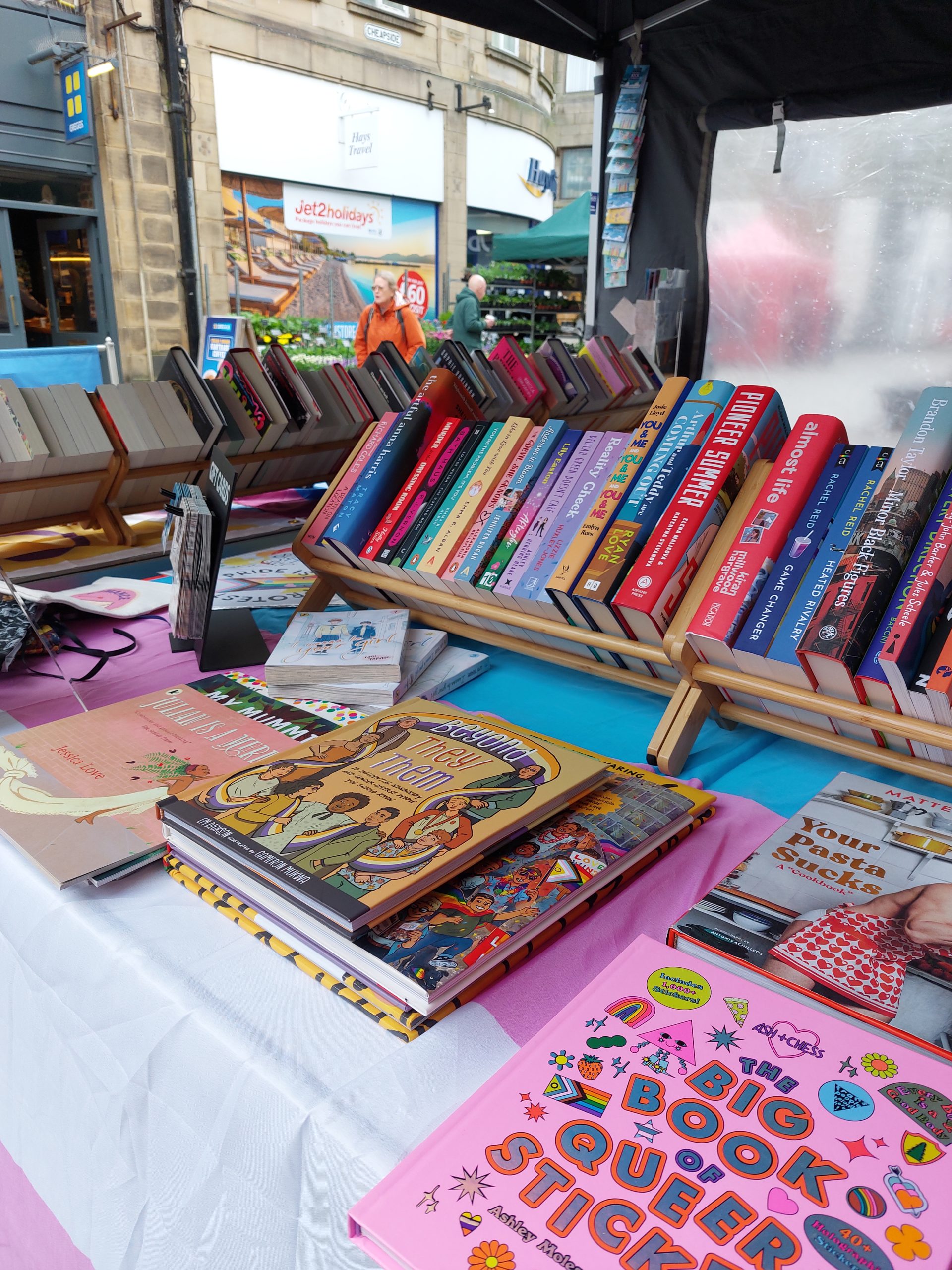
In the second half of my market day, when the spitting clouds leave and the sun emerges, a friend of mine came to collect an order they placed last week. I hand over their books, we chat, customers drift to and from my 3m2 gay bookshop. Quite strangely, there have been very few odd encounters. As a stall on an outdoor market, I have an unofficial role of street therapist, as people (often men) decide I am the best vessel for depositing pain in. As I’ve spent a good portion of my adult life being told I’m unapproachable, this new hat fits awkwardly. So, to have strangers in the street tell me about their death anxiety or fears of stillborn grandchildren is, to say the least, unexpected. But these people are absent today. I am having a normal day, uncoloured by the perplexing oddities that come with this secondary hat I never asked to wear.
A person comes up to the stall and idly browses my stuff. I sense they’re not a serious customer and probably just killing time, so I continue chatting with my friend. This customer, after a few minutes, remarks on one of the ‘nan’s against nazis’ fridge magnets, injecting themselves with a story of how their nan once tackled a Japanese man in Canada. The customer confirms that it was likely some kind of trauma response. I blink slowly, processing granny’s xenophobic trauma response.
They then pivot to more direct questions about the stall and how my business is going. Almost everyone who has talked their way to this topic is itching to tell me how to run my business better. I give a rote answer – that things are good, sales are consistent and the people who do come to the stall are often enthusiastic about an indie bookstore – and expect the typical condescending advice about how things should be run, as if I have never thought about second hand selling, buying books off people, stocking more classics, or perhaps even non-gay things. Instead, this person, still holding the fridge magnet, asks if I’ve been harangued by the religious people who walk the streets. There was a loud, elderly preacher down the high street earlier, so this isn’t out-of-nowhere exactly, but we’ve gone off-script. Perhaps I was wrong in my judgement and this is a more meaningful interaction than I gave initial credit for.
I’ve not been harangued by a zealot in the streets. They prefer to yell from JD Sports’ window display, which sits on the corner of two of the high streets. The footfall must be incredible. The other religious street walkers are Mormons, who have looked at my stall with a combination of pity, fear and closeted yearning. Men glancing for a little longer than is strictly necessary is a familiar sight from the view of my little gay bookshop. The religious folk that do come up to the stall are more interested in talking about fantasy or mystery novels than salvation, though a vicar once praised me for stocking The Book of Queer Prophets and waxed poetic about how it changed their spiritual practice. The titles that reconcile faith and queerness have this effect on people and it’s heartwarming to see the joyous effect of inclusive writing.
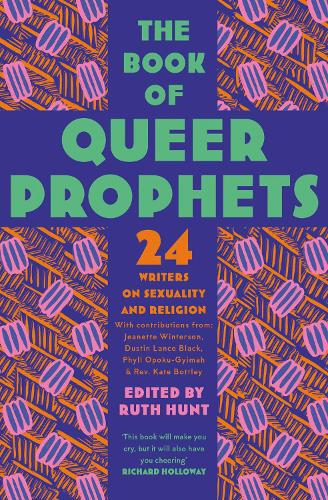
I made the faux pas of referring to the street preachers as ‘jesus freaks’. This customer then decided to say that they were that as well, and expressed curiosity in how the church can repair its relations with agnostic queers. I blinked slowly, taking in the change to the cadence of their speech, shifting into the tones of ‘I’m about to talk at you’.
I told them that I was not godly, and just ran my little gay bookshop. My views on the reconciliation of individual faith, organised religion and queer identity are, frankly, unimportant. I suggested they talk to an inclusive practitioner, noting that the local methodist church does an inclusive service every month. If they wanted answers on these big questions, it might be better to speak with someone who thinks about this stuff on a regular basis. My slate-grey canopy and aluminium concertina tables are not, first and foremost, a site for epiphany or revelation.
I’m quite fascinated by what this person hoped to achieve in speaking to me. If my opinions were as important as they claimed, then listening to what I had to say would make it quite clear that I’m not really up for finding the Lord. And my advice – talk to someone who thinks about this often; they’ll have greater insight than me, some guy on the street you came across – wasn’t received, as the Godly visitor asserted that my opinion was what mattered.
So if conversion and information were not the goals of this encounter, what was? Was the goal simply to earn some good boy points because of a pathetic attempt at spreading the Word? The emptiness of the interaction – the lack of any real interest in an exchange of ideas – surely carries little celestial currency. Who has helped cultivate the notion that such vapid attempts at communicating with others are something the Father, Son or Holy Ghost might cherish?
My Godly visitor then asked me if I was willing to trade. I said yes, provided the trade was made in sterling. If nothing else, this encounter let me sharpen my improv skills. They agreed to my terms and actually bought the fridge magnet. They then gave me a pamphlet, which I flicked through with my friend after the Godly visitor has departed. It wasn’t a particularly inspired religious pamphlet, simply being copies of passages. The last page had a pre-written declaration of the owner’s sin with a little box the person could sign underneath, to save a little time in coming to terms with what Jesus did for us and our debauched earthly lives.
A short while after my friend left, they DM’d the shop, having looked into the specific church my Godly visitor belonged to. The church – Trinity Church Lancaster – is both anti-gay and anti-trans. Their statement of faith interprets Genesis 1:27-28, Genesis 2: 20-24, Ephesians 5:21-33, and 1 Timothy 2:11-15 as asserting only the existence and divinity of binary gender identity and heterosexual marriage. My stall obviously peddles in aberrations to this church, with its holographic trans woman stickers and array of queer romances, so I’m again left wondering what this person was trying by talking to me. Nevertheless, if you’re local or a travelling Christian looking for a service that’s inclusive, you might want to avoid this church. There are at least three inclusive churches in Lancaster, so I’m sure it can’t be hard to find a religious place that doesn’t practice queerphobic loser behaviour.
Perhaps he was crossing a yawning gap and seeking to learn – can a fridge magnet be the first step to spiritual growth? – so I might have to get more queer Christian books in that do that faith work so I’m not being called to for answers. In his 2020 memoir, Something that May Shock and Discredit You, Daniel M. Lavery/Ortberg (depending on the edition) spends time reflecting on his relationship with faith and writes
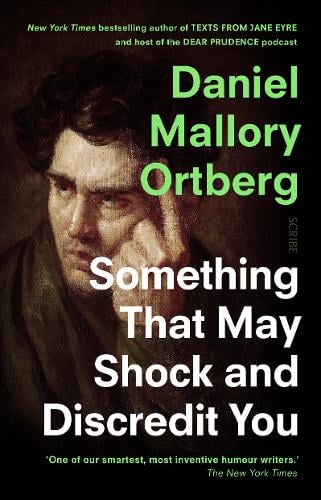
‘God blessed me by making me transsexual for the same reason God made wheat but not bread and fruit but not wine, so that humanity might share in the act of creation.’
I am not godly, but I find something spiritually profound in the notion that parts of creation lay half-formed so that we may share in the core act a Creator allegedly did. If making stuff is the action of a higher power, then it stands that making and self-making is a significant action in feeling as one with that higher power.